
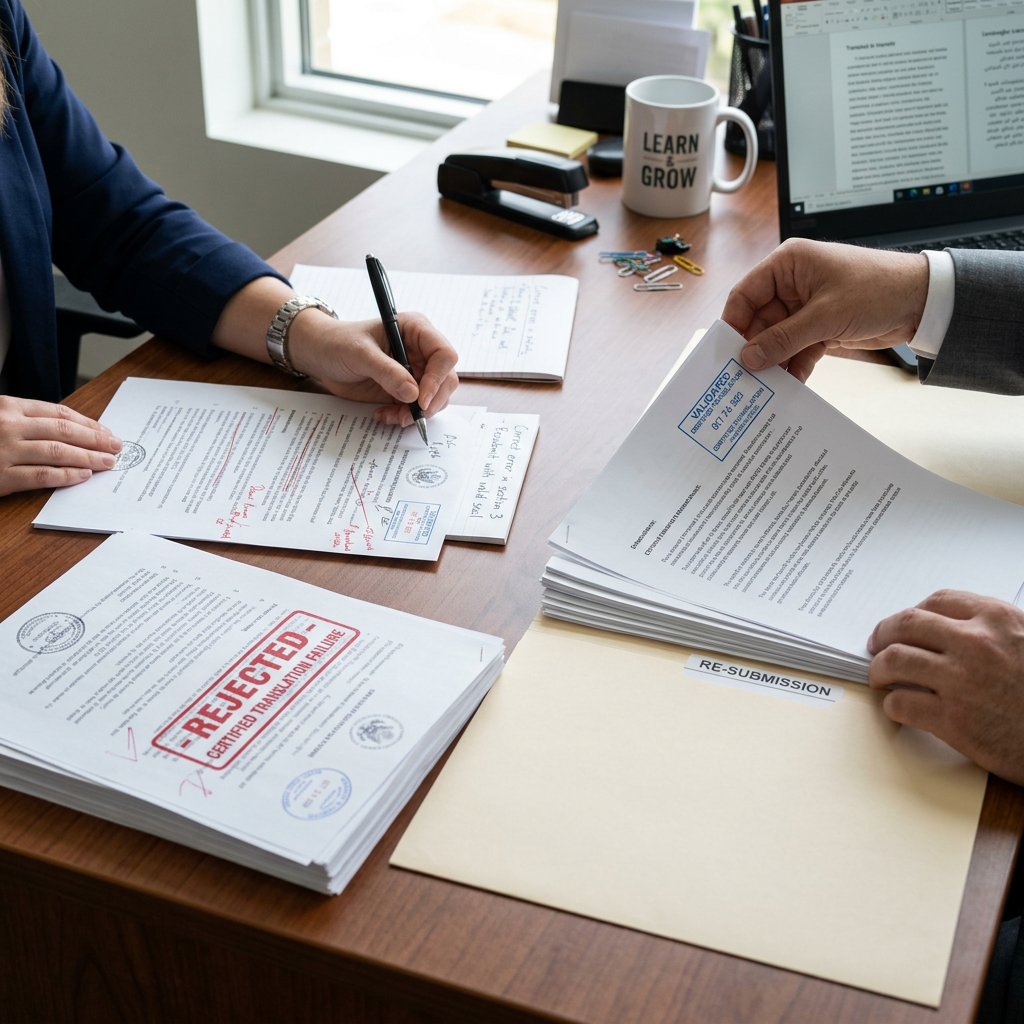
Receiving a rejection notice after submitting a certified translation is stressful and frustrating. But it happens — and knowing what to do next can save you significant time. Here is a practical guide to handling a rejected certified translation.
Common Reasons for Rejection
- Missing or improperly formatted Certificate of Accuracy
- Translation provided by an uncredited or unrecognized translator
- Incomplete translation — missing stamps, seals, or sections
- Incorrect target language for the institution's requirements
- Notarization or apostille required but not provided
- Poor quality original document (too blurry to accurately translate)
Immediate Steps to Take After Rejection
- Request a written explanation of the rejection reason from the institution
- Contact your translation service immediately with the rejection notice
- Do not submit a revised translation until you fully understand the rejection reason
- Check if the institution has a formal appeal or resubmission process
How to Prevent Rejection Next Time
- Always confirm requirements with the receiving institution before ordering translation
- Choose a certified translation service with a track record at your specific institution
- Ask your translation service to review institution-specific formatting requirements
Conclusion
A rejected translation is not the end of the road — but it is a costly and time-consuming setback. Working with an experienced certified translation service from the start is the best protection against rejection and the surest path to first-time acceptance.