
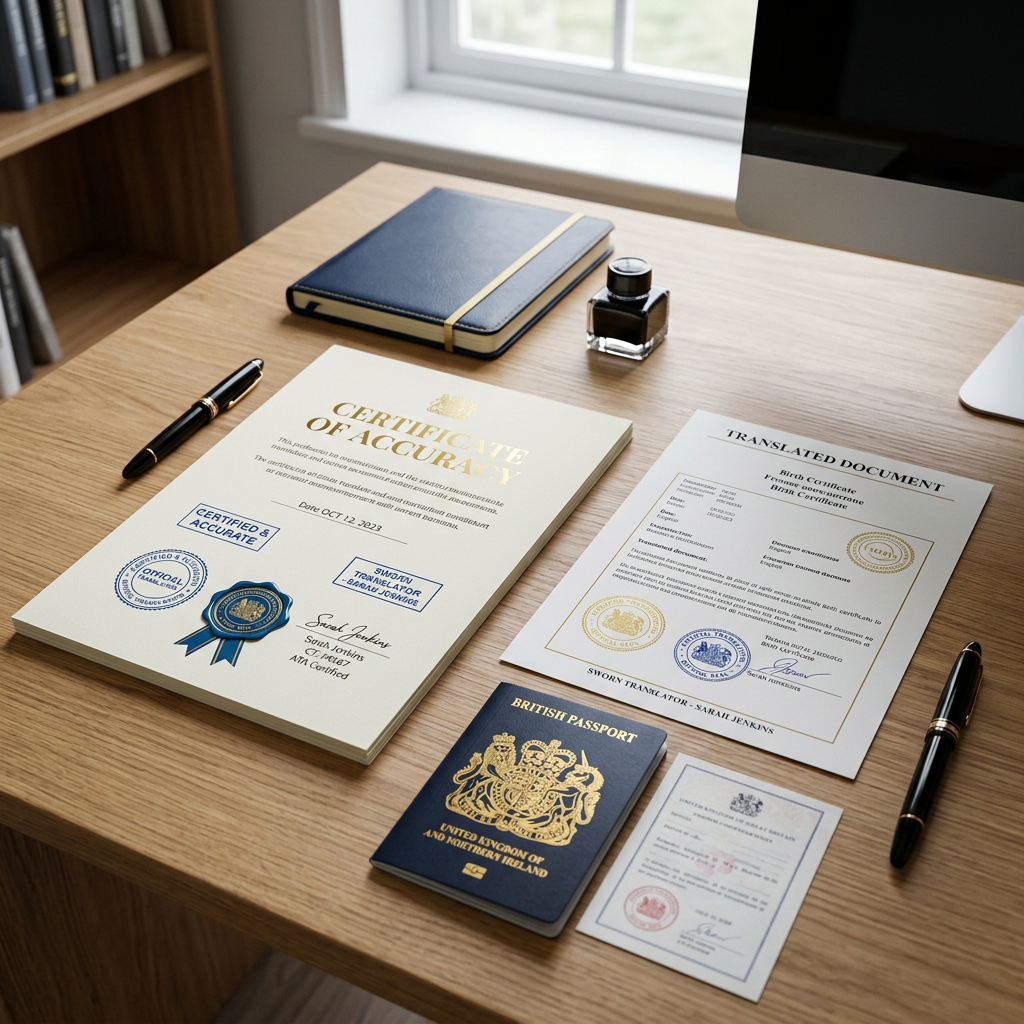
Excellence in Every Translation
At our core, we believe that certified translation is not just a service — it's a responsibility. In today's connected world, documents cross borders for immigration, education, legal matters, and business. But not every translation qualifies. Governments, courts, and universities demand a certified translation that carries official legal weight and unwavering accuracy.
What Makes a Translation Certified?
A certified translation is a translated document accompanied by a signed Certificate of Accuracy from the translator or agency, confirming the translation is complete, accurate, and reliable. This certification gives your document its legal standing.
The Three Pillars:
- Accuracy verified by a certified professional
- Legal acceptance by governments, courts, and embassies worldwide
- Complete fidelity to the original document — nothing omitted
When Your Documents Demand Excellence
Certified translation becomes essential in these critical situations:
- Visa and immigration applications — your path to a new country
- University enrollment and credential recognition — your academic future
- Legal proceedings and court submissions — your justice
- Medical records abroad — your health security
- International business contracts — your commercial success
Certified vs. Notarized: Know the Difference
These terms are often confused.
Certified translation verifies the accuracy of the translation by the translator's professional seal and signature.
Notarized translation adds a notary public's stamp, verifying the translator's identity — but not the translation quality.
Always confirm which one your institution requires. We provide both.
Our Commitment to You
Certified translation is the gold standard for official document submissions worldwide. When you choose a qualified certified translator, your documents are accepted on the first submission — saving you time, money, and frustration.
Trust matters. Accuracy matters. Certification matters. We deliver all three.