
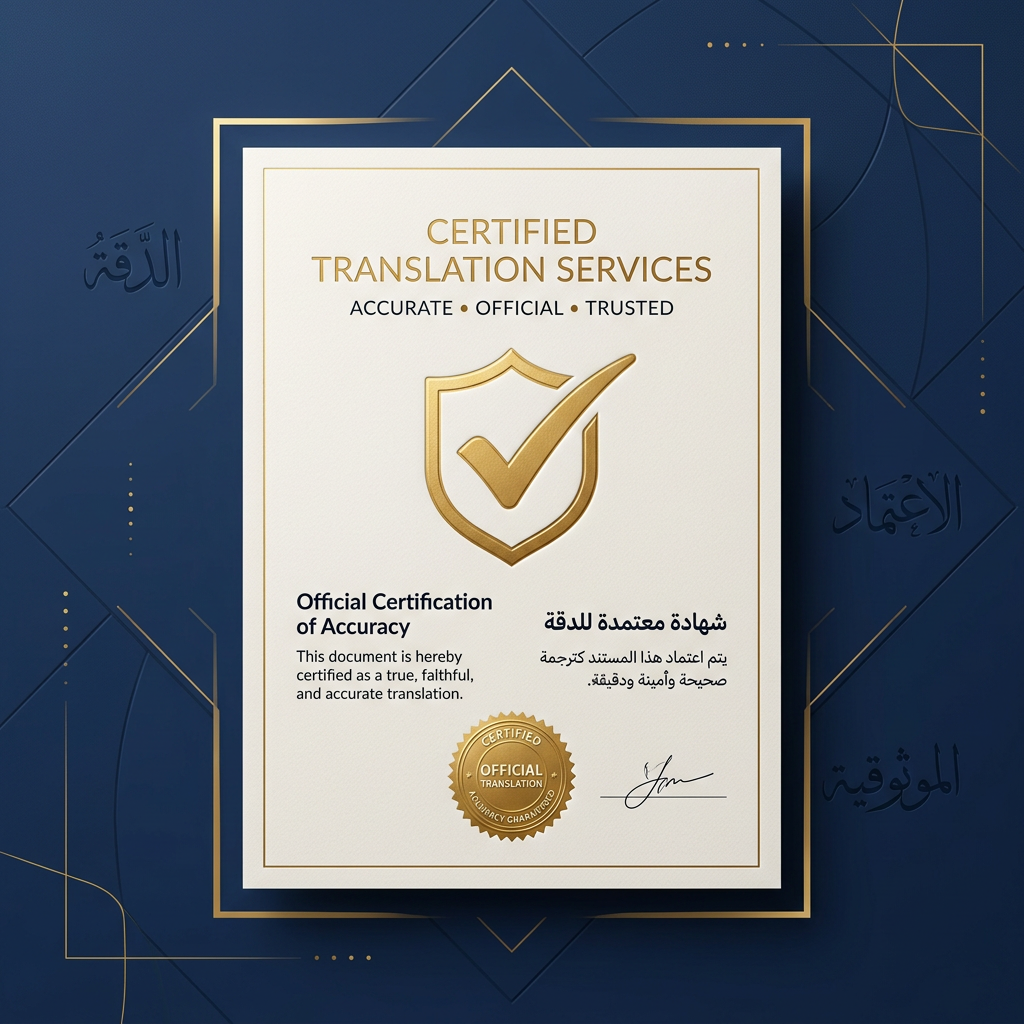
Protecting Your Brand Through Certified Translation
Your trademark is more than a logo — it's your brand's legal identity and competitive advantage. In Saudi Arabia, the Saudi Authority for Intellectual Property (SAIP) mandates certified translation for any trademark containing foreign language text. This isn't bureaucracy; it's legal protection.
Understanding Trademarks Under Saudi Law
Under GCC Trademark Law applied in the Kingdom, a trademark is any distinctive sign used to distinguish your goods or services from competitors. This includes:
- Names, words, and signatures
- Letters, symbols, and numbers
- Designs, images, and engravings
- Packaging, shapes, and color combinations
Why Certified Translation Is Non-Negotiable
Foreign-language trademarks must be accompanied by an officially certified Arabic translation. This requirement serves four critical legal functions:
- Verifying compliance — ensuring the mark doesn't violate public order or Islamic principles
- Detecting conflicts — identifying semantic similarity with existing registered marks
- Enabling opposition — allowing interested parties to challenge during the 60-day publication period
- Creating legal record — documenting the mark's true meaning in all official proceedings
What Qualifies as Legally Certified?
A certified translation must be issued by a translator officially licensed by the Ministry of Justice. It must bear:
- Official translator's seal and signature
- Credentials and license number
- Declaration of accuracy and completeness
For foreign documents, additional notarization or embassy authentication may be required.
Your Path to Registration: 6 Essential Steps
Step 1: Conduct Prior Art Search
Search the SAIP trademark portal comprehensively by name (Arabic and English), semantic meaning, phonetic similarity, and conceptual equivalence. Thorough research prevents rejection.
Step 2: Prepare Certified Translation
Engage a Ministry of Justice-accredited translation office early. The translator must verify that the Arabic equivalent doesn't resemble any existing registered mark.
Step 3: Submit Application Online
File through the SAIP electronic platform. Select all relevant Nice International Classification categories covering current and future business activities.
Step 4: Formal and Substantive Review
SAIP reviews both form and substance (7-30 days), including cross-checking your translation against the mark's content.
Step 5: Publication and Opposition Period
Your mark is published in SAIP's electronic gazette with its certified Arabic translation for 60 mandatory days. Any party may file opposition.
Step 6: Final Certificate Issuance
If unopposed, pay the final fee and receive your electronic certificate. Your mark is protected for 10 Hijri years, renewable indefinitely.
Investment in Your Brand Protection
| Fee Item | Amount (SAR) | Note |
|---|---|---|
| Application Fee | 1,000 | SAIP official |
| Publication Fee | 1,575 | Includes 15% VAT |
| Registration Fee | 5,000 | 10-year protection |
| Certified Translation | 200–600 | Varies by complexity |
| Approximate Total | 7,775–8,175 | Per Nice class |
All fees subject to 15% VAT; may be updated by SAIP.
Expert Tips for Success
- Select Nice classes strategically to cover all current and anticipated business activities
- Combine word + graphic elements for stronger legal protection than text alone
- Monitor your SAIP account regularly — missing deadlines abandons your application
- Plan for appeals — you have 60 days to object rejections; further appeal to Administrative Court available
- Consider Madrid System for international protection beyond Saudi borders
Common Rejection Reasons to Avoid
- Substantial similarity to existing marks in your class — conduct thorough searches
- Purely descriptive marks (e.g., "Honey" for honey products) — use creative, distinctive names
- Geographic or national symbols — prohibited by law
- Hidden violations revealed by translation — ensure your mark complies culturally and morally
Your Certification Questions Answered
Can I self-translate my trademark?
No. Only Ministry of Justice-certified translators carry legal standing before SAIP. Self-translations are rejected.
Do purely graphic marks need translation?
No. Certified translation applies only to marks containing foreign-language text. Pure logos don't require translation.
Does commercial registration protect my trademark?
No. Commercial registration (CR) is a business permit. Trademark registration separately protects your brand identity and prevents imitation.
What if I miss the publication fee deadline?
Your application is abandoned. You must file a new application with new fees from the beginning.
Our Commitment to Your Brand
Your trademark deserves excellence. Certified translation ensures your brand is protected legally, culturally, and commercially across Saudi Arabia and beyond. Trust the process. Protect your brand.